Note: this ‘history’ is what I have picked up in the 8weeks I’ve been in country. I don’t have references.
When Western Europeans (mostly Dutch, German, British) colonized what is now Namibia, sometimes they “relocated” many indigenous tribes and ethnic groups. They usually did this because they wanted their land or some of the tribes were nomadic and they would periodically disturb the lands the colonists had cultivated. When Namibia was part of South Africa and apartheid was enforced, the blacks and coloreds (i.e. Indigenous tribes and ethnic groups) were “relocated” even more. Many towns and cities still have a “location”, the area where mostly blacks and coloreds live. Blacks and coloreds are free to live anywhere now but due to financial constraints and/or family history of generations living in the location, they are still largely populated by blacks and coloreds. Many locations are divided into sections by specific tribes or ethnic groups such as the Damara-Nama area, the Herero area, the Owambo area, etc. Unfortunately, this is also a result of apartheid when it was against the law for tribes to mix not just according to skin color.
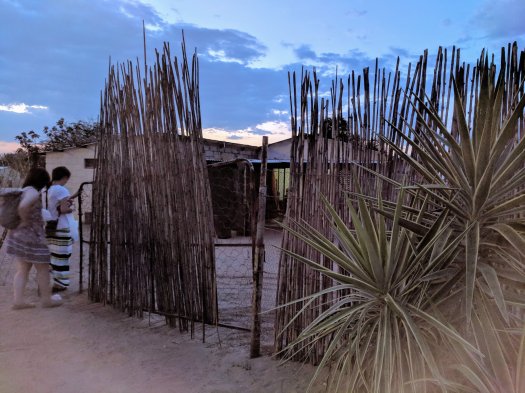
Some sections have shacks of corrugated metal with no indoor plumbing or electricity and other sections have modern homes complete with flat screen TV and cable.
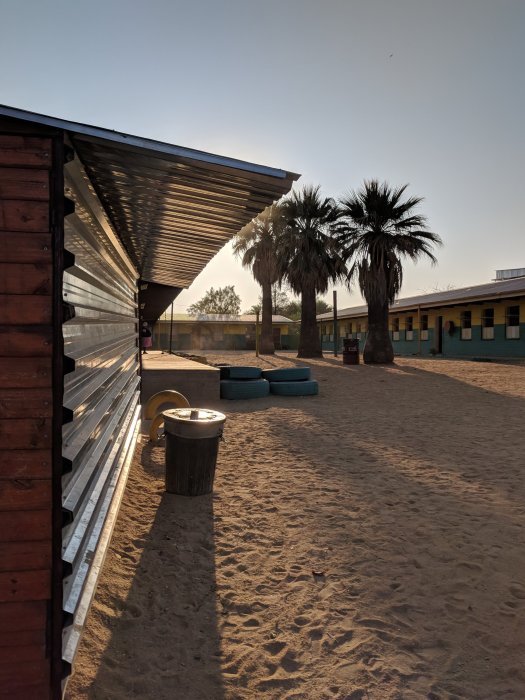
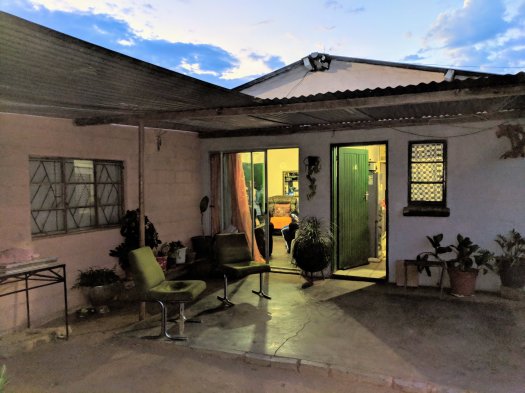
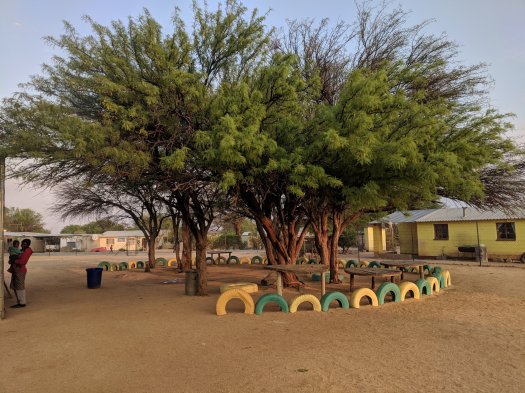
Tierra, a Peace Corps Volunteer (PCV) who teaches at the primary school in the Omaruru location, hosted four trainees to observe at her school and to see how she has integrated into her community. Since she only has a 1-bedroom home, we took our meals with her, but we slept across the street at her host mother’s house. This visit gave us another view of education in Namibia and an up-close, personal look at life as a PCV.
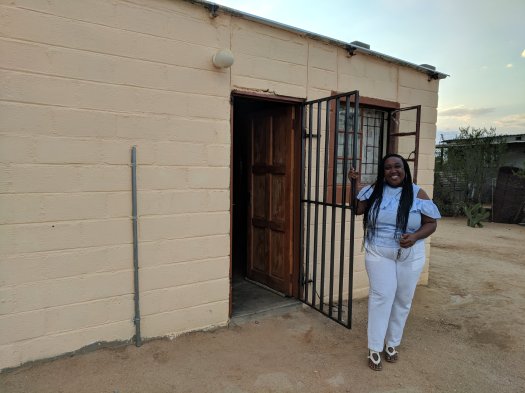
Tierra’s cute, little house


All for now, with all my love
 Where's GranEllen?