I’m more like Mom than I thought

My Mom turned 91 this year and is very excited that I am serving in the Peace Corps. Like all my family, she is supportive because she knows it is my dream. Even if she doesn’t quite understand it, she wants what I want, as long as it is not immoral or harmful. The unconditional love and support from her and all my family made it both easier and harder to leave in August. Since my departure, I’ve been thinking a lot about my Mom and her huge influence on my life.

I used to think my Mom and I were complete opposites. Growing up, I was a tomboy, I would throw on some clothes, pull my hair into a ponytail or back with a headband, and I was ready to go. I had no patience or desire to curl my hair, learn to wear makeup, or walk in high heels. My Mom ‘put on her face’ every morning, she religiously has her hair done every week, her nails are manicured, she takes very good care of herself. She dragged me to Avon or MaryKay makeover parties, so I would at least learn how to do these things when I ‘grew up’. My routine is not much different as an adult, but I now wear some lipstick, I try to keep my skin soft with lotion, I even highlight my hair occasionally. I take good care of myself like my Mom taught me.

My Mom is an avid reader and she enjoys good movies. I have those same passions and we enjoy discussing our latest reads or movies we’ve seen.  My Mom is competitive, just play a simple card game with her to learn that about her. My friend Sherry once told me that I have a fierce competitive streak when we were playing some silly game like Pictionary at a girls’ night. I couldn’t believe it, but she was right, and I know just where it comes from. I realize that I spend my free time much in the same way as my Mom.

My Mom is a flexible cook. One of our favorite family meals was fried fish we pulled out of the Gulf on Dauphin Island before we had even unloaded the car. Mom had her electric fry pan, crushed the potato chips we had on hand as breading, and we ate those fish before they even knew they were out of the water. Because of my Mom, I can make do with what’s on hand. I recently made biscuits with yogurt instead of milk and they tasted yummy!

My Mom is an adventurer. She made every military transfer, and there were many, an adventure. Home was not a single place or town, it was with our family. If our Dad was not with us, then ‘coming home’ meant coming to where we were. I now see that my adventurous spirit comes largely from my Mom because she made it okay and fun.

Okay, I am still a tomboy and my Mom is still the belle of the ball. However, when it comes to my core values and what brings me lasting joy, I am more like my Mom than I once thought.
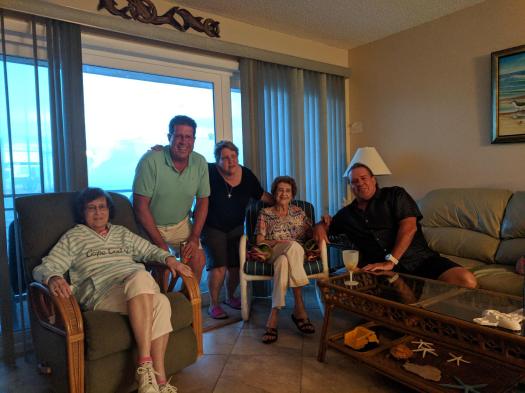
image000000_01
My Mom at 91 and her four children

Weekend Fun

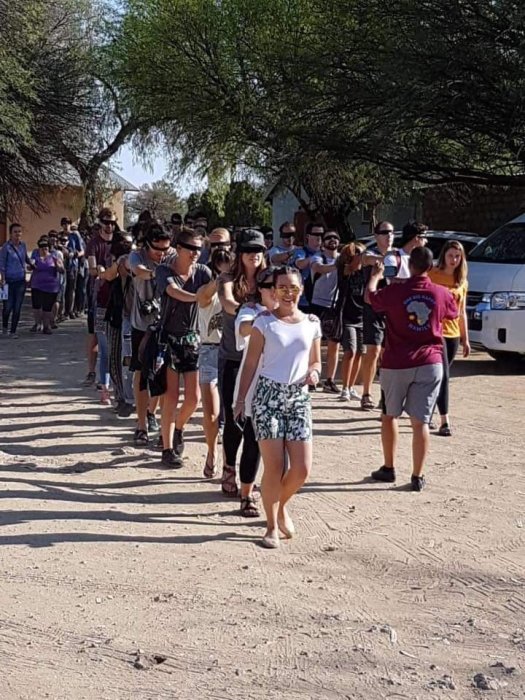
I spent the weekend with my Namibia family, the family I stayed with during my training in Okahandja. It was a big weekend with K’s matric farewell event, an event like our prom, except it is their way of saying farewell to their primary and secondary education. For many, this is considered the first step into adulthood. The other big family event was 16-year-old, D’s confirmation. This is the church’s sacrament for stepping into adulthood. There was lots of extended family around all weekend, lots of photos, lots of food, and a general weekend of celebration.

Friday night was the ‘prom’ night but first were the requisite photos with grandparents and family. Before the main event at the country club (sounds like the US) there was a non-alcoholic cocktail event at the school that each graduate can invite 2 family members. K invited her Dad and his mother – this grandmother made her formal gown. All the family, friends, and basically the entire high school comes to watch this event. We stood outside the school grounds and waited for couples/graduates to show up in their finery. They laid down a red carpet for their walk from the car to the grounds for the cocktail party. It is crazy, they are celebrities for the day, reminiscent of the Academy Awards.

Saturday was low key with only an evening service for the confirmands, but this was not the actual confirmation. Earlier in the day was food prep for Sunday and general hanging out with family and friends stopping by.

Sunday was a baptism, confirmation for eight young people, and a special ceremony to induct 2 special elders. I’m not sure exactly of the elder ceremony, they were already elders of the church so this was something extra. I miss a lot in translation. I am slowly getting better at understanding Afrikaans, but it is hard for this ‘mature’ brain. After the 3-hour ceremony with lots of singing, there was a big lunch in their back area. It is not a back yard because it is totally dry dirt. They have a huge awning where they usually park the car, but it makes a nice, covered area for a party. They move the car but keep it close and play music from it with all the doors open. They periodically crank it to keep the battery going. It works very well!

It was a fun weekend with my Namibia family.


Land of Extremes and other observations

Namibia is a land of extremes. The Namib Desert with its extreme dunes runs next to the Atlantic Ocean, Namibia’s western border. The Kalahari Desert runs through much of Namibia’s eastern border. Most of Namibia is arid and dry but there can be extreme flooding when the rains come. Even without flooding, locals say that when the rains come, everything turns green overnight. I have not witnessed the rains and I have not seen the desert dunes yet, but I have witnessed other extremes.
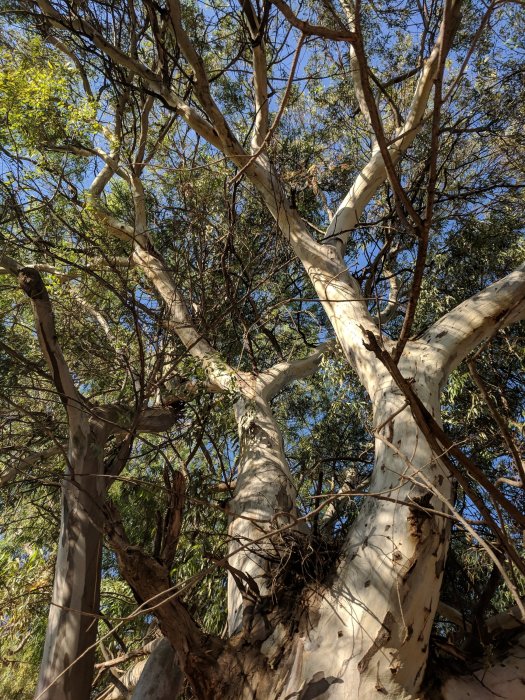
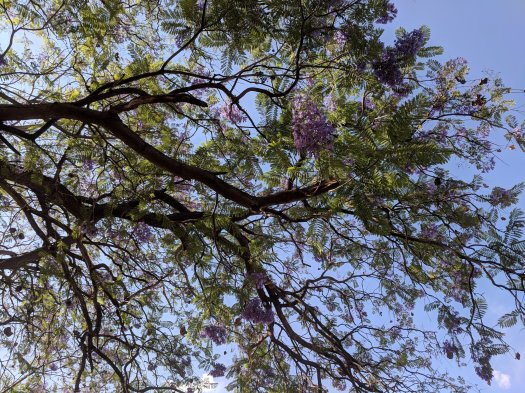
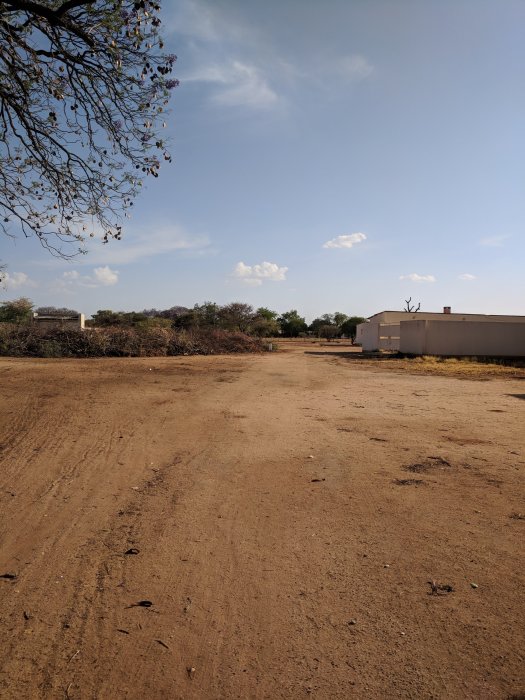
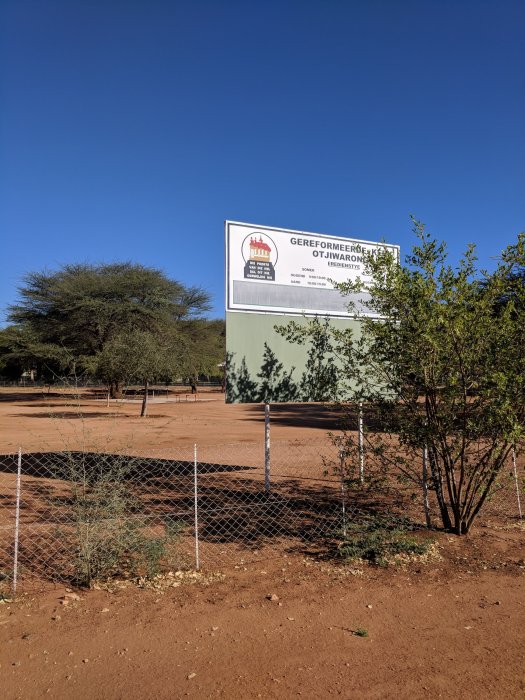
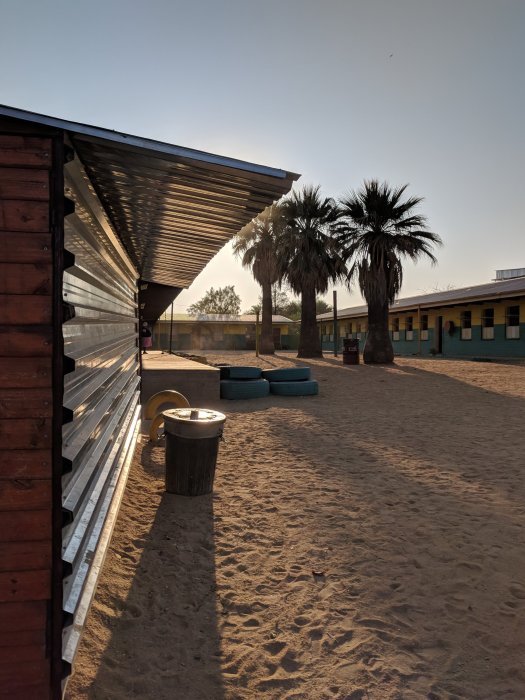
Included are a couple photos of the lush entrance to my school and some trees from my hostel grounds. Juxta-positioned to both are the dry grounds on the side and back of the hostel and the church property across from the school.

Claudia, the German teacher, invited me to help her bake Stollen (German breakfast bread) and gingerbread cookies and to swim in their pool. She graduated from our school and now she is married with a 3yr old daughter and a 5yr old son. It was a fun day with a fellow teacher and the pool felt wonderful!

Claudia’s mother tongue is German, her husband’s is Afrikaans. They both speak to their children in their mother tongue, and in English. Ursula, the 3yr old, has a unique language of her own creation. Her father describes it as the inflection, accent, and pacing of English TV but the words are a mix of German and Afrikaans. I find it amazing!

Another interesting thing I’ve learned is that some blacks know and understand Afrikaans, but they will not speak it. They will speak English. It doesn’t take much sensitivity to understand this. Afrikaans was the national language under South African rule and apartheid. After independence in 1990, English became the national language, but Afrikaans is still spoken throughout the country. Coloreds and Basters don’t seem to have the same aversion to Afrikaans. Surprisingly to me, even though the young nation has come a long way since independence there are racial tensions between the diverse ethnicities, not just between the whites and everyone else.
All for now, with all my love

Lush grounds of school entrance

Trees from hostel grounds

Dry lands adjacent to the school and hostel

First Week at Site

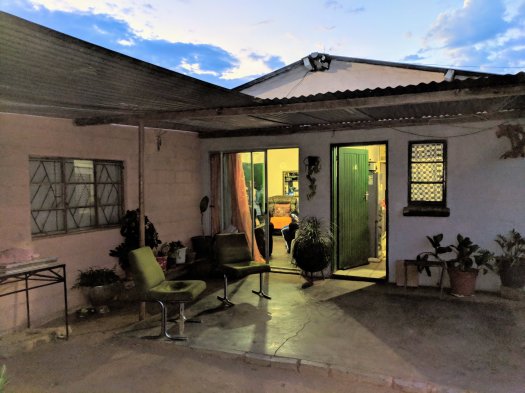
Teacher house on left side of girls’hostel

My first week at school and my home for the next 2 years has been good. My housemates are Ester, her 5-month-old son, Blessing, and her cousin Martha who serves as Blessing’s nanny. Ester teaches Entrepreneurship and Development Studies (a social studies class about how to develop countries) at the same school where I go. Ester and Martha come from the North and their mother tongue is Oshiwambo although they both speak English and Afrikaans very well. Ester’s grandmother sends her home with mahangu, so she makes oshifima/pap regularly, the common porridge that is used to scoop up meat, gravy, stews with your hands. Ester and Martha also use mahangu to make oshikundu almost daily, a fermented drink which can be alcoholic but theirs is not. I am developing a taste for both oshifima and oshikundu, they grow on you.

My school is one of the best government schools in the region and in the country. It was an Afrikaans school prior to independence and still has a heavy Afrikaans and German presence although most learners are black with Herero, Nama/Damara, Oshiwambo, and other ethnicities. The classrooms and grounds are well kept, the learners have textbooks, the teachers are thoughtful and caring but the classrooms are over-crowded, and resources are slim. They seem more skilled than some other schools at fundraising to augment their government funding. People apply from all over to send their children here which is why there is a hostel for both boys and girls. They take learners of all skill levels, not just high-level learners or from wealthier families. I live in the teacher quarters of the girls’ hostel.

One of the white teachers and her husband are both 3rd generation in Namibia with their grandparents migrating from Germany. They own a crocodile ranch which is part export business and part tourism. They sell skins to mostly European countries but there is also a demand in Asia. The ranch has a restaurant, an events venue, and a couple rooms available on air b&b. They invited me to lunch there yesterday to meet a British couple that have made Namibia home for the past 9 years. It was a delightful meal sharing interesting perspectives among old and new citizens/workers in Namibia.

I will start teaching in January when the new school year starts. Currently I am observing as many classes as possible, not just Physical Science and Math which is what I expect to teach, but all kinds of classes. The idea is to familiarize myself with the culture of the school and styles of teaching. I am also learning what resources are available at the school and getting to know the key staff who can help me access the resources – i.e. Admin staff, copy room staff, IT staff, and all those people who do so much behind the scenes. Once my teaching load is finalized, I will start preparing lesson plans.

It looks like my experience will be in a city, at a comparatively great school, and I will have many modern conveniences such as clean water, indoor plumbing, electricity, easy shopping. At the same time, this is a developing country with extremely high prevalence of HIV/AIDS, teenage pregnancy, domestic violence, gender inequality. Peace Corps has been asked to serve this community and I will serve the best I can.

All for now, with all my love

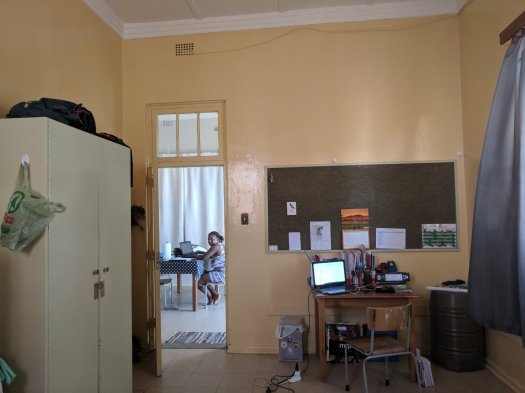
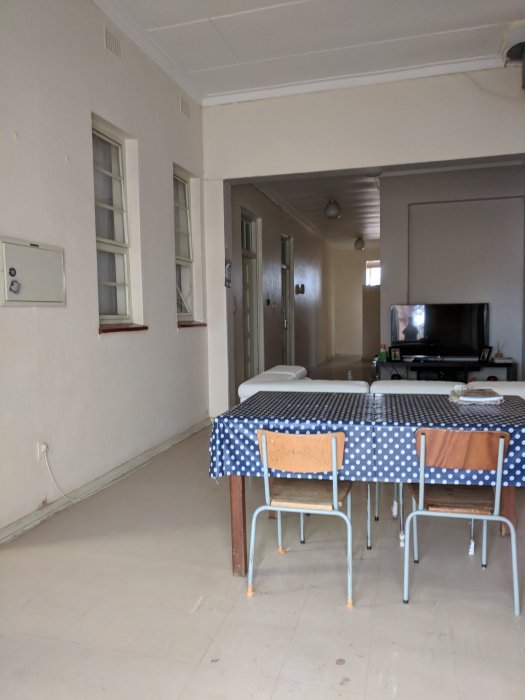
Out from my room to Ester at the common area table.
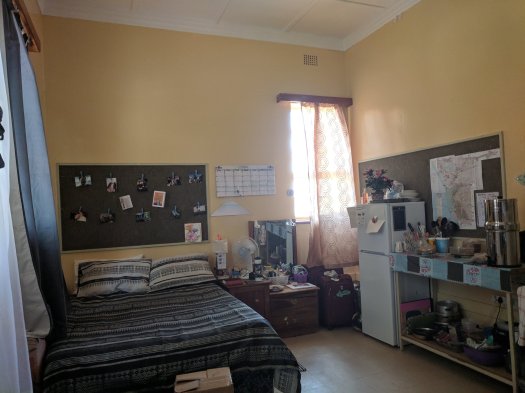
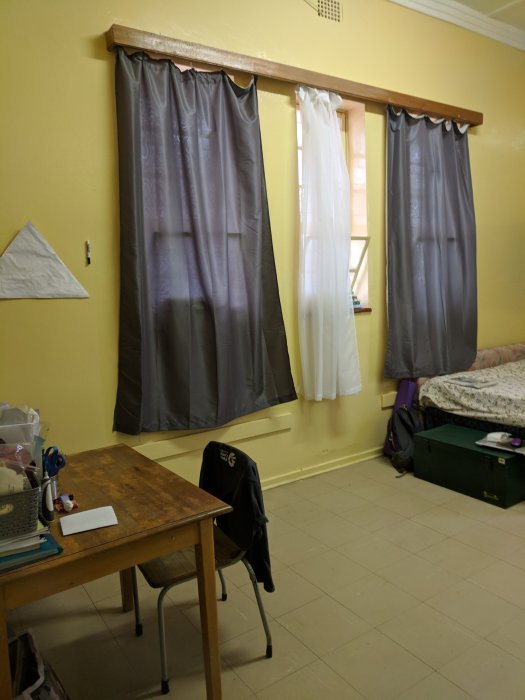
View into my room
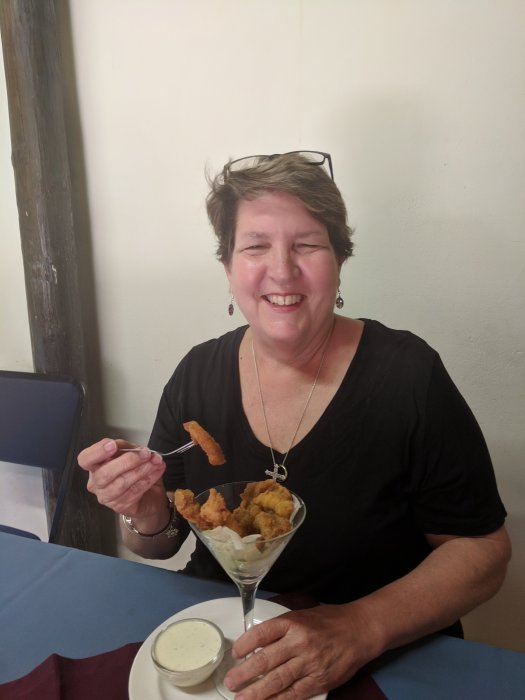
Eating crocodile bites, yummy!

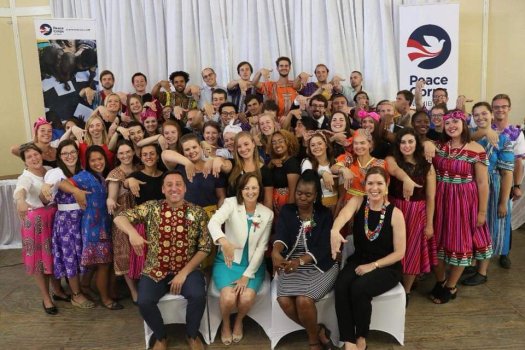
Swearing-in!

So, this is the week I swore in and transitioned from being a Peace Corps Trainee to a Peace Corps Volunteer (PCV). The 10 weeks of training have been very structured, lots of rules about what we could or could not do in our down time, our food was prepared for us, and all our needs were met. This was the first ‘dry’ Pre-Service Training (PST) in Namibia which meant that we could not drink in public. We could have a beer or glass of wine with our host family but that was it. I think the policy makes sense. We stand out, we are vulnerable targets for thieves and alcohol can impair your judgement. Why not take this time to think clear headed and become aware of potential threats? Anyway, the point is that we were kind of in a bubble during PST. Immediately following the swearing-in ceremony, I was driven about 2 hours North by the friendly principal of my school, given a brief tour of the town, shown where to report to school the next day, and dropped off at my new site. All of Group 48 were at their new sites by the next day, some without electricity or indoor plumbing, of which I have both. Basically, we are on our own. Of course, we have each other for support and we have resources for help, but we are on our own. Peace Corps assumes we will reach out for support, use our resources and meet the expectations we swore to uphold. Amazingly, by far, the majority of PCVs do just that. I am proud to be in Namibia’s Group 48, the newest group of Peace Corps Volunteers!

All for now, with all my love

Swearing-in
The common area in my new home that I share
My room, still working on it but it is livable
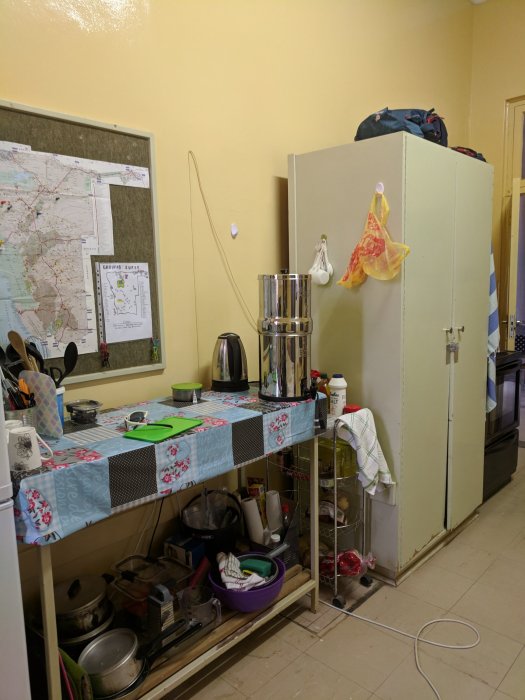
My kitchen area with refrigerator and counter
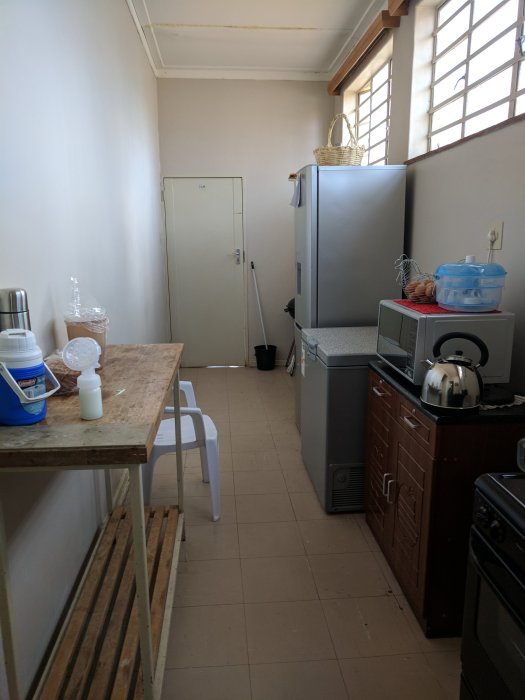
This is the real kitchen down the hall
And the pantry with kitchen sink

Week 9-SITE Reveal Day, 10/5!

This was the day we had been waiting for, the day we found out our 2-year home while serving the Peace Corps. First, we were told the process of site selection and then we were prepared for the varying emotions. Some will be happy, some sad, some angry or not in agreement with their placement. Honestly, I was emotional just thinking it was a miracle that I was here at all and how much I miss Steve. I would leave today if I could just have another normal day with Steve but that is not possible, so I am happy to be here.

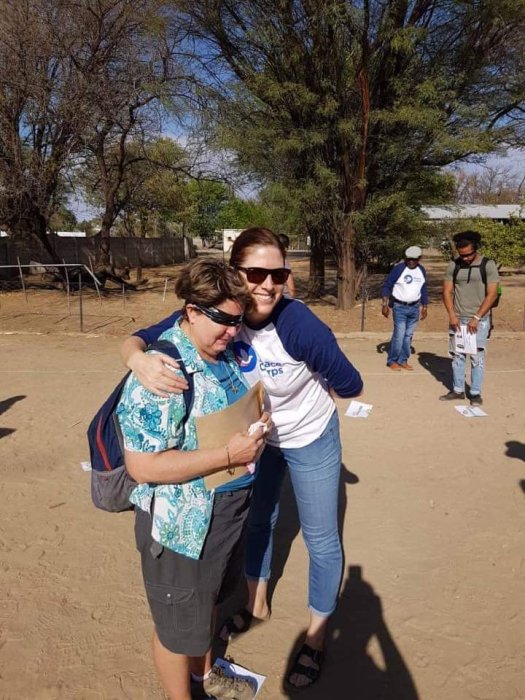
We were blindfolded and walked to our spot on the map of Namibia that was laid out in the yard. We were handed a packet about our site. When all the trainees were in position there was a countdown, we removed our blindfolds, looked down to see our site name, and then opened our packets.

I will teach at a secondary school in a city of @30,000 about 300 km north of the capitol, Windhoek. They need a Physical Science teacher for 8-9 graders and a Math teacher for 8-10 graders. According to all the locals, it is an exceptional school and a nice town. I will share a 3-bedroom teacher house on the school premises with 2 women and the 5-month-old son of one of the women. The women are not Peace Corps volunteers (PCV).

My packet included a letter from the PCV that I am replacing, and she says the women are terrific roommates. My packet also says it is a modern house with electricity, running water, indoor toilet, shower, refrigerator and a note saying that I am lucky to have all this, and they may not always work.

I guess I am not living in a mud hut after all!

All for now, with all my love

Here’s some photos of the day

Week 8 a little history

Note: this ‘history’ is what I have picked up in the 8weeks I’ve been in country. I don’t have references.

When Western Europeans (mostly Dutch, German, British) colonized what is now Namibia, sometimes they “relocated” many indigenous tribes and ethnic groups. They usually did this because they wanted their land or some of the tribes were nomadic and they would periodically disturb the lands the colonists had cultivated. When Namibia was part of South Africa and apartheid was enforced, the blacks and coloreds (i.e. Indigenous tribes and ethnic groups) were “relocated” even more. Many towns and cities still have a “location”, the area where mostly blacks and coloreds live. Blacks and coloreds are free to live anywhere now but due to financial constraints and/or family history of generations living in the location, they are still largely populated by blacks and coloreds. Many locations are divided into sections by specific tribes or ethnic groups such as the Damara-Nama area, the Herero area, the Owambo area, etc. Unfortunately, this is also a result of apartheid when it was against the law for tribes to mix not just according to skin color.

Some sections have shacks of corrugated metal with no indoor plumbing or electricity and other sections have modern homes complete with flat screen TV and cable.

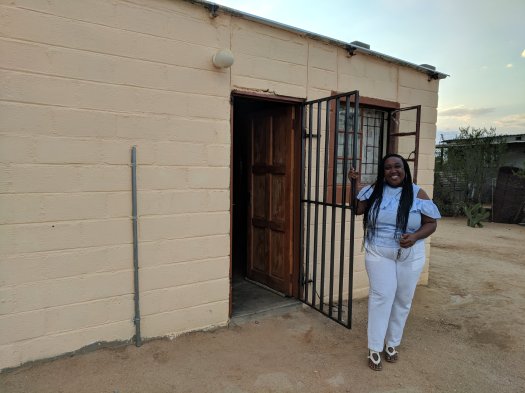
Tierra, a Peace Corps Volunteer (PCV) who teaches at the primary school in the Omaruru location, hosted four trainees to observe at her school and to see how she has integrated into her community. Since she only has a 1-bedroom home, we took our meals with her, but we slept across the street at her host mother’s house. This visit gave us another view of education in Namibia and an up-close, personal look at life as a PCV.

Tierra’s cute, little house

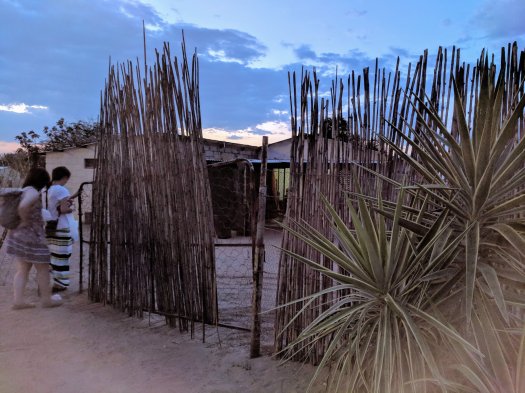
Entering host Mom’s property
Bougainvillea outside of school office
The school grounds in the morning
Host Mom’s patio area and entrance to the house. Very comfortable!
The school has a lovely garden. This school is well cared for and well loved
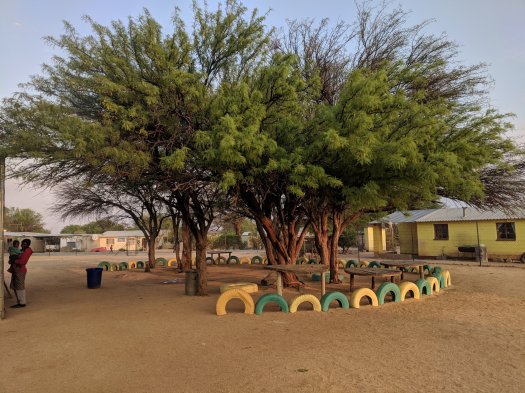
Shade trees on the school property

All for now, with all my love

A Damara tradition

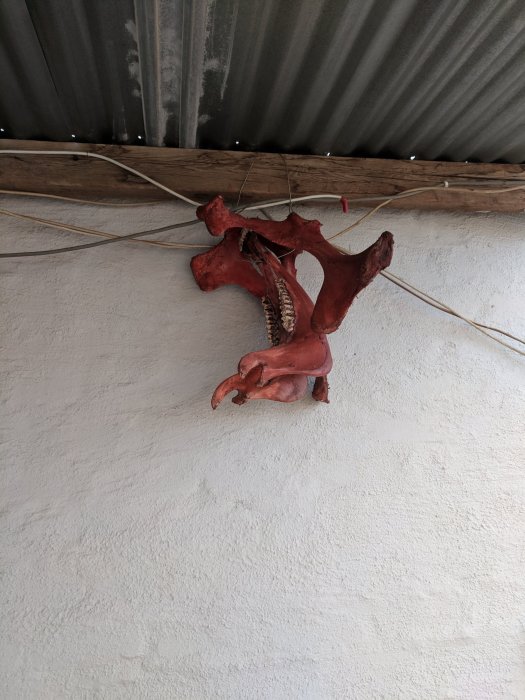
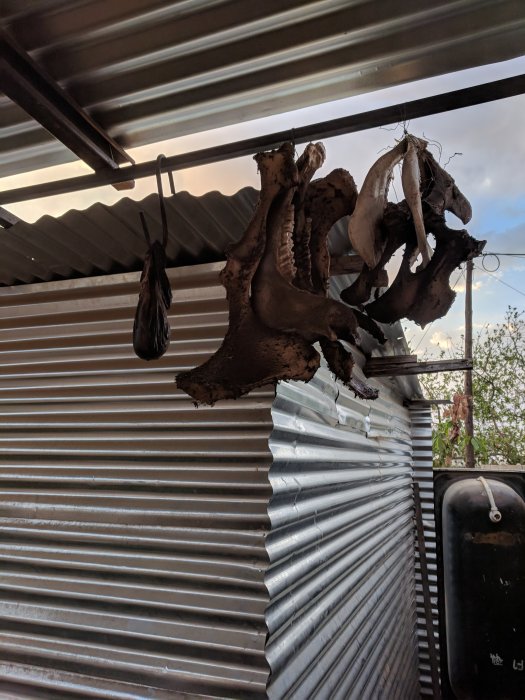
I learned this weekend that a Damara tradition is to slaughter a cow for a wedding. The meat from the pelvic area is served only to the older women that had or have good marriages. They are very careful while cutting the bones and cooking the meat from those bones to not break any of the bones. It is bad luck if a bone breaks in this process and is a sign the new wife will not bear children. The bones are then cleaned and hung at the house who hosted the wedding, usually the bride but not always. Sometimes they also dye the bones a ucher color. The bones are hung by themselves for a year and then they can be moved where earlier wedding bones are hung or to the newlyweds’ home.

Another tradition is to hang a white flag on the roof for a wedding which stays until the weather dissolves it. They hang a Black flag for a death but only until the funeral is complete.

All for now, with all my love

Pictures of pelvic bones from a September 1 wedding and another of several from earlier weddings. The video is a wind/rainstorm with the white flag blowing. These were all taken yesterday where I am staying until Wednesday. I will send more about this visit in another post.

God winks/Steve winks

During our Braii (BBQ), at my host family’s house, last Saturday evening, they started playing several Vince Gill songs and then other country songs by older artists such as Chet Atkins. I really couldn’t believe these would be in their playlist. If you knew Steve, you knew how much he liked country music and particularly these artists. I shared this with my family at home and my niece called it a God wink letting me know Steve is with me in spirit. I love that, and I got more this week.

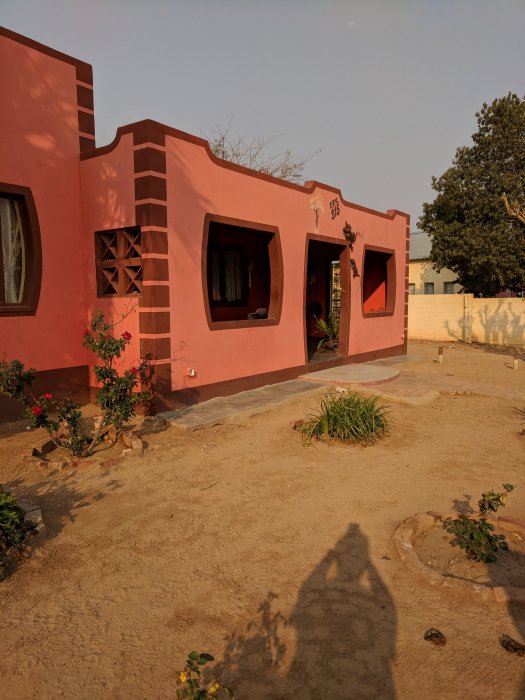
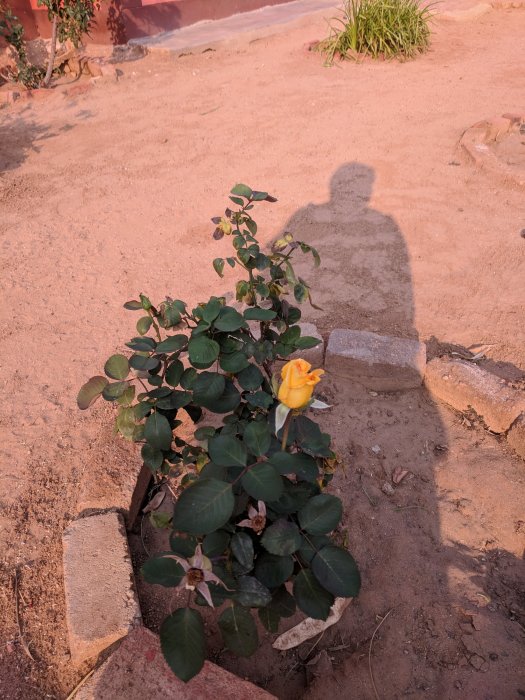
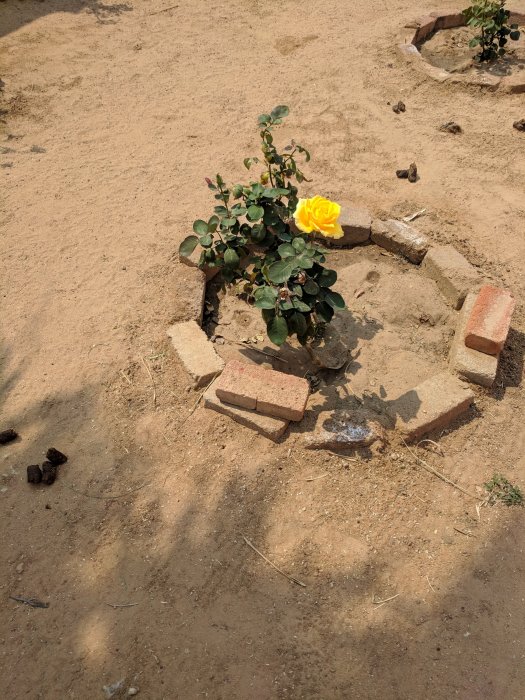
Our 31st wedding anniversary would have been last Wednesday, September 19 so Steve was on my mind even more than usual. My host family mom and I have been watching the sunset, so I went to the porch to join her. As I looked out for the sun, I noticed a small yellow rose bud on the plant in her yard. It is a miracle the plant can survive, let alone bloom, in this dry soil and afternoon heat. Yellow roses are my favorite and Steve gave them to me almost every anniversary. I call that another wink from Steve/God, they are both with me.

All for now, with all my love

Week 6 in Namibia-School Based Training

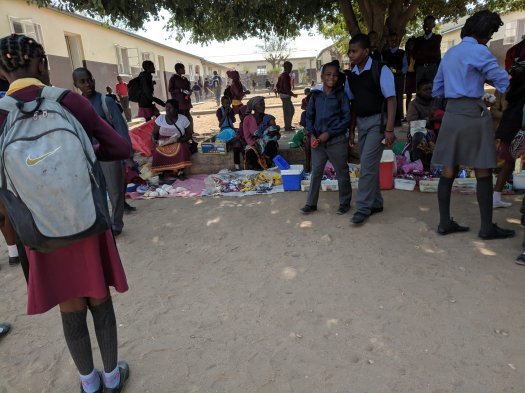
Vendors selling sweeties,fat cakes, fruit during break

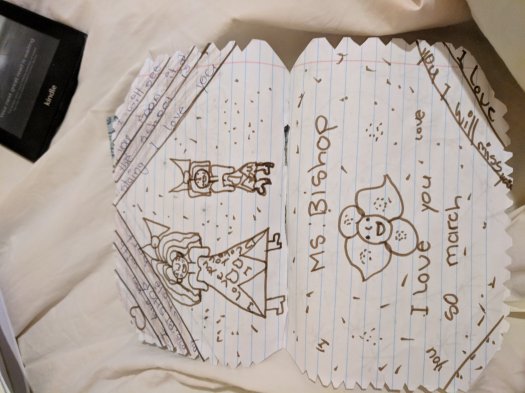
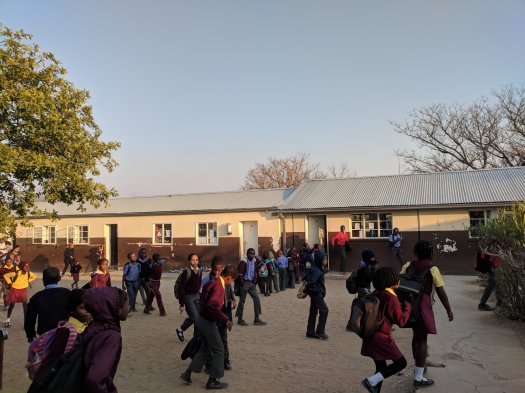
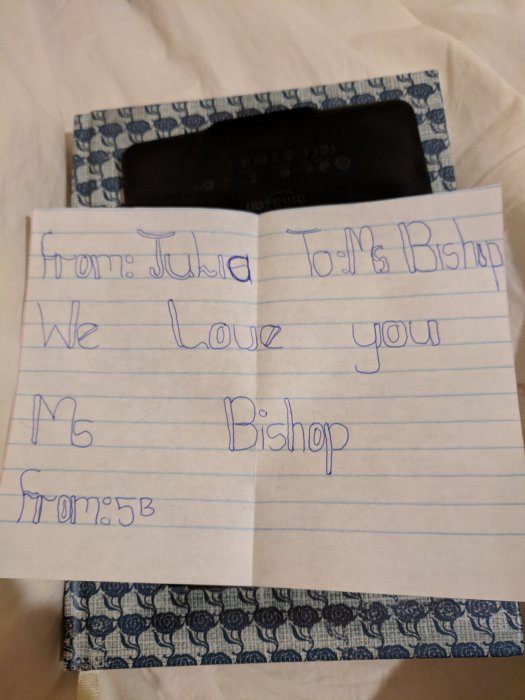
(For some reason I can’t get captions on the other photos. Photo 2 There are roughly 1450 learners at this school, grades 0-10. There are 8 other buildings similar to what you see here. Photos 3&4 are “love” letters from my learners. We all get them. We are like celebrities on campus

I have two interesting things to share that happened at school this week. After completing the 5th grade lesson with some time to spare, I was reviewing long division with my learners and decided to “check it” using multiplication. When I completed the multiplication and added the remainder and the result was the same as what we had been dividing, the class thought it was like magic. They said, “Do another, do it again” and we did until the class was over. It was the first time they saw how to do this.

In another class, I let them ask some questions about me. They already knew that I had five children and 8 grandchildren. One boy asked if I beat my children. I said my children are grown and bigger than me now, but no, I did not beat them. He kind of laughed, so did others, and some shook their heads – kind of like they were scoffing at me. “But”, I said, “I did punish them.” I would have said “consequences” or “discipline” but “punish” was the only word I was certain they understood. He asked what I did. I said I made them go to their room, I took away privileges like TV, phone, friends. I made them do extra chores and rarely, if they were especially bad, I sent them to bed with no dinner. There was a collective gasp, nodding of heads, and they understood I was not weak.

All for now, with all my love